
About RubricPort LLC

Built around the real work of institutional assessment.

RubricPort was developed from firsthand experience with the repeated administrative work behind higher-education assessment: building and revising rubrics, maintaining Program mappings, aligning criteria and standards, routing evidence, supporting faculty and students, managing clinical practice, analyzing results, preparing accreditation evidence, and producing reports that remain useful beyond the assessment platform.

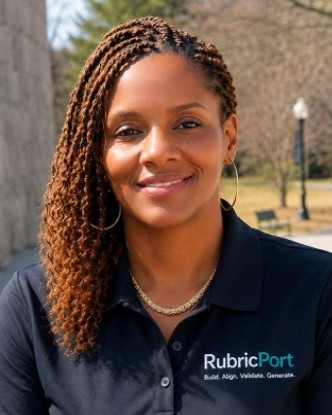
Dena Silver, Founder and Solutions Consultant of RubricPort LLC
Founder

Dena Silver

Founder & Solutions Consultant

RubricPort grew from direct experience supporting College of Education assessment, accreditation, Program reporting, faculty, students, portfolio administration, Field Experiences, and data preparation.

The goal is practical: reduce repetitive work while preserving the evidence quality and institutional control required for meaningful assessment and accreditation.

Request a Demo

A product family that grows with the institution

RubricPort Build™

Build. Align. Validate. Generate.

Create and maintain the institutional assessment structure: Crosswalk Imports, bulk rubric generation, Manual Rubric Builder, Assessment Definitions, Criteria Library, institution-defined scales, standards and competency alignment, validation, and supported outputs.

Explore Build

RubricPort Analyze™

Everything in Build, plus Analyze & Report.

Add RubricPort-native Program, assessment, criterion, survey, accreditation, institutional-effectiveness, reliability, longitudinal, and saved-report workflows.

Explore Analyze

RubricPort Complete™

The full operational assessment environment.

Add People & Access, submissions, assessment, RubricPortfolio, Field Experiences, forms and surveys, dispositions, training and certification, support, notifications, and institution-scoped administration.

Explore Complete
Configured around your institution

RubricPort uses one institutional architecture while allowing each licensed organization or academic unit to configure its own Programs, assessments, criteria, standards, competencies, scales, mappings, roles, workflows, and reporting structure.

Flexible institutional growth

Begin with Build, expand to Analyze, or implement Complete. Organizational scope can also expand from one department or college to additional units, university-wide use, or multi-campus/system environments through an approved licensing change.